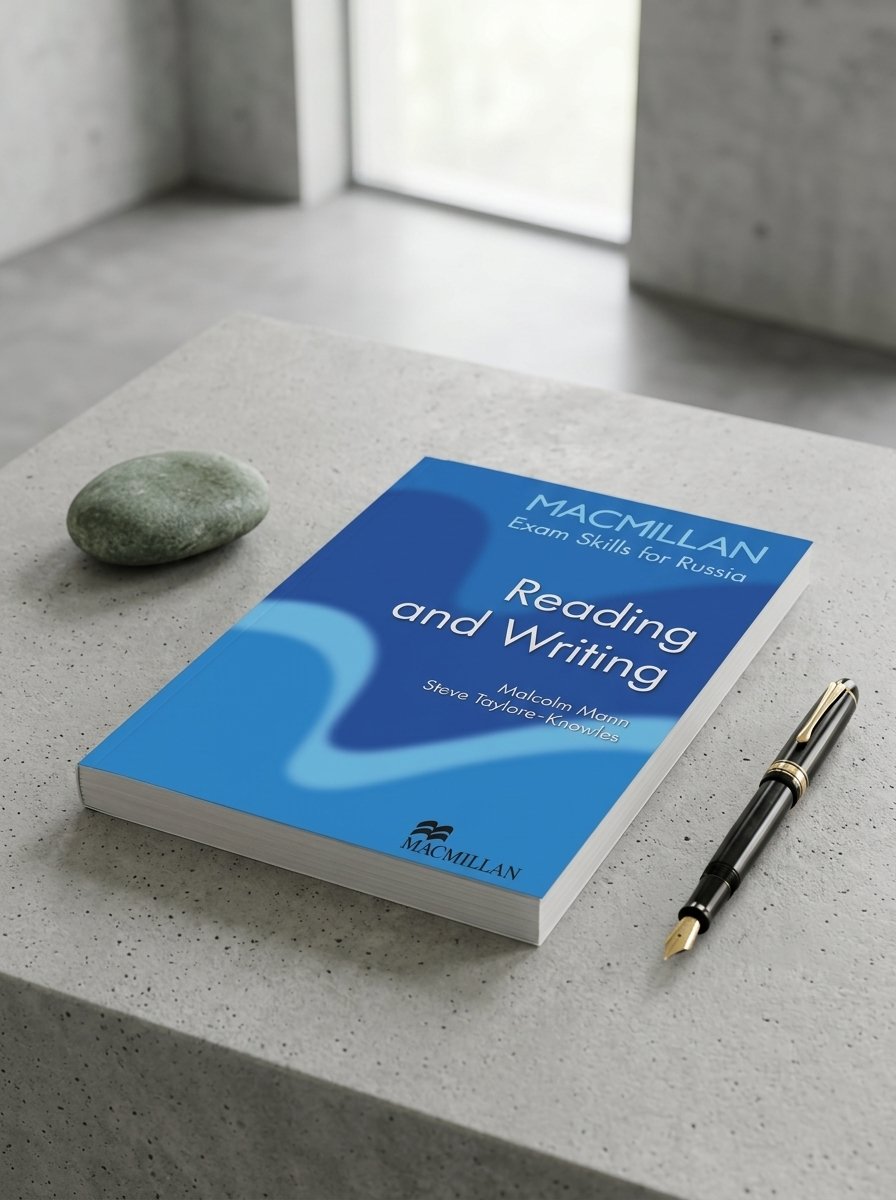
Macmillan Exam Skills for Russia: Reading and Writing is a dedicated test-preparation workbook designed specifically for Russian students facing English language examinations. It systematically develops the two receptive skills most critical for success: reading comprehension and written production.
H2: The Targeted Structure of Macmillan Exam Skills for Russia: Reading and Writing
Macmillan Exam Skills for Russia: Reading and Writing is organized into two distinct halves, each addressing one skill with precision. The reading section covers skimming, scanning, detailed comprehension, and text completion tasks. Task types mirror actual Russian exam formats, including multiple-choice, matching headings to paragraphs, true/false/not given, and gap-fill exercises. The writing section teaches email composition, essay structures, and short narratives. Each unit presents a model text, then breaks down the linguistic features before guiding students through their own production. Unlike generic international workbooks, this book uses culturally familiar contexts—topics about Russian cities, traditions, and daily life—reducing cognitive load while practicing English. This targeted design makes Macmillan Exam Skills for Russia: Reading and Writing far more effective than imported materials for its specific audience.
H2: Exam Strategies Embedded in Macmillan Exam Skills for Russia: Reading and Writing
Beyond simple practice exercises, Macmillan Exam Skills for Russia: Reading and Writing explicitly teaches test-taking strategies. For reading, students learn how to identify distractors, manage time across multiple texts, and answer without understanding every word. Tips appear in colored boxes: “First read the questions, then the passage” and “Look for synonyms, not exact matches.” For writing, the book provides paragraph templates, linking word lists, and common opening/closing phrases. A scoring rubric shows how examiners award points for task achievement, coherence, vocabulary, and grammar. Students practice under timed conditions with authentic-looking answer sheets. Additionally, each unit includes a “common mistakes” section drawn from real Russian student errors, such as false friends (magazine translating to shop) or incorrect preposition usage. By demystifying the exam’s internal logic, Macmillan Exam Skills for Russia: Reading and Writing reduces anxiety and improves scores through informed preparation.
H2: How Macmillan Exam Skills for Russia: Reading and Writing Builds Academic Vocabulary
Vocabulary acquisition is systematically embedded throughout Macmillan Exam Skills for Russia: Reading and Writing. Each reading passage introduces 10-15 target words in context, followed by matching, gap-fill, and sentence-completion exercises for retention. The word lists focus on high-frequency academic vocabulary (analyze, establish, significant) rather than obscure literary terms. Furthermore, the book teaches word families (compete, competition, competitive, competitor) and collocations (make a decision versus do a decision). A glossary at the back translates all key terms into Russian, providing immediate clarification without interrupting study. For writing, students learn topic-specific vocabulary for common exam themes: environment, technology, education, health. Repetition across units ensures long-term retention. Unlike phrasebooks that encourage memorization without understanding, Macmillan Exam Skills for Russia: Reading and Writing trains students to deploy vocabulary flexibly. This lexical approach directly addresses the weakness most Russian examinees face: limited active vocabulary during timed writing tasks.
H2: Teacher and Self-Study Features in Macmillan Exam Skills for Russia: Reading and Writing
Macmillan Exam Skills for Russia: Reading and Writing serves both classroom and independent learners equally well. For teachers, the book includes a separate answer key with model writing answers and explanations for every reading question. Photocopiable progress tests allow for benchmark assessment every four units. Classroom discussion prompts encourage pair work and peer correction. For self-study students, the book provides clear instructions without requiring a tutor. Each exercise includes an example answer, and writing tasks come with checklist rubrics for self-evaluation. Audio transcripts (for the reading passages) are printed in full. The layout uses ample white space, allowing students to write answers directly in the book. Additionally, a final practice test replicates real exam conditions, complete with time limits and answer sheets. Whether used in a formal course or independently, Macmillan Exam Skills for Russia: Reading and Writing offers complete, standalone preparation.
H2: Limitations and Best Uses of Macmillan Exam Skills for Russia: Reading and Writing
While excellent for its niche, Macmillan Exam Skills for Russia: Reading and Writing has deliberate limitations. The book excludes listening and speaking skills entirely, so students need separate resources for those exam components. Additionally, the reading passages are shorter than those on advanced international exams like IELTS or Cambridge English. The book targets intermediate (B1-B2) levels, not advanced (C1-C2) students. Grammar explanations are minimal; users should already know basic English grammar before starting. Best use involves pairing this book with a general English coursebook. Complete all reading units before writing units, as reading provides vocabulary for writing. Take the final practice test under strict timing, then analyze every error. Teachers should assign one unit weekly, using the progress tests to identify struggling students. For Russian students targeting university entrance or state exams, Macmillan Exam Skills for Russia: Reading and Writing remains a trusted, effective choice.