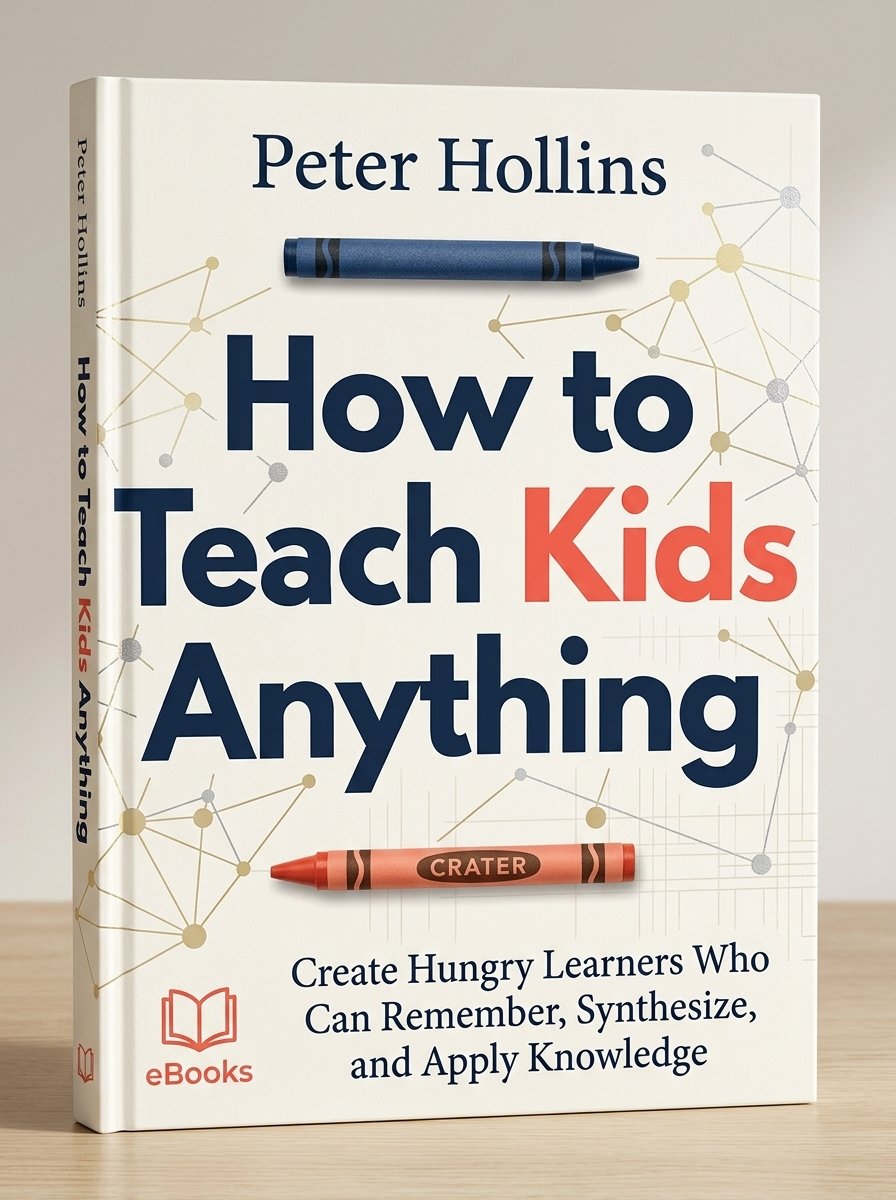
The Book link is given below: Kids aren’t small adults—their brains learn differently. How to Teach Kids Anything is the science-backed guide for parents, teachers, and caregivers who want to turn frustration into curiosity. From tying shoes to multiplication tables, this approach replaces pressure with play, repetition with discovery, and resistance with genuine excitement. Below, five principles that work for any subject, any age, and any child—starting today.
Start With What They Already Love
How to Teach Kids Anything begins with a simple bridge: connect new material to existing passions. Does your child love dinosaurs? Teach counting with three T-rexes and five triceratops. Obsessed with space? Practice spelling by labeling planets. The brain releases dopamine when it encounters familiar interests—that chemical makes learning feel good. Before introducing any new topic, spend five minutes asking: “What’s your favorite thing right now?” Then build your lesson around that answer. A child who resists math might spend an hour calculating Pokémon stats. You’re not tricking them. You’re using their natural curiosity as the doorway. Resistance drops when relevance rises.
Teach in 5-Minute Micro-Lessons
Attention spans in children average two to five minutes per year of age. How to Teach Kids Anything uses this reality instead of fighting it. Never lecture beyond five minutes without interaction. Set a visible timer. Teach one tiny concept—like the letter “B” or how to hold scissors. Then stop. Do a physical activity: jump three times, run to the window, clap a rhythm. Then return for another five-minute chunk. Research shows that multiple short sessions spaced across a day create stronger memory than one long, draining lesson. Your child isn’t lazy. Their brain is protecting itself from overload. Respect the limit, and they’ll beg for more instead of begging to quit.
Use Mistakes as Discovery, Not Correction
Most adults correct errors instantly. How to Teach Kids Anything recommends waiting. When a child misspells “butterfly” as “butrfly,” don’t say “wrong.” Say, “Interesting! Let’s look at the word together. What do you notice?” Let them discover the missing letter. Self-corrected errors create three times stronger neural pathways than corrected errors because the child’s brain does the work. Keep a “Beautiful Mistake” jar. Write each error on a slip and celebrate it weekly. This flips shame into curiosity. A child who fears mistakes stops trying. A child who hunts mistakes becomes unstoppable. Your job isn’t to fix them. It’s to stand beside them as they fix themselves.
Embed Every Lesson in a Story
Facts fade. Stories stick. How to Teach Kids Anything turns every concept into a narrative. Teaching fractions? “A hungry monster ate two of eight pizza slices—how many are left?” Teaching history? “Imagine you woke up as a Roman kid. What would you eat for breakfast?” The brain processes story and fact in different regions—stories activate emotion, imagery, and cause-effect tracking simultaneously. That’s four times the neural engagement of dry explanation. Before any lesson, spend two minutes inventing a character or problem. “Once there was a squirrel who couldn’t count his acorns…” Watch your child lean in. You’re not teaching anymore. You’re telling a story they need to finish. That need is called intrinsic motivation.
End Every Session With “What Do You Wonder?”
Most lessons end with “Do you understand?” That question invites lies. How to Teach Kids Anything ends with “What do you wonder now?” This tiny shift changes everything. Understanding signals closure. Wondering signals curiosity—the engine of lifelong learning. A child who wonders “Why is the sky blue?” after a weather lesson will research independently. A child who just “understands” stops thinking. Keep a Wonder Journal. Write down every question your child asks after learning. Spend five minutes the next day answering just one of them, even if it’s off-topic. You’re training a brain that chases questions instead of fearing quizzes. That child won’t need to be taught. They’ll teach themselves. And that’s the ultimate goal of How to Teach Kids Anything.